Kidzonia updates / Uncategorized
Reggio Emilia: the hundred languages of children
An approach from a small Italian town that treats paint, clay, movement and argument as ways of thinking.
After the Second World War, parents in the town of Reggio Emilia in northern Italy built their own preschools, some of them literally from the rubble. A teacher named Loris Malaguzzi joined them, and together they developed what is now known around the world as the Reggio Emilia approach.
The big idea
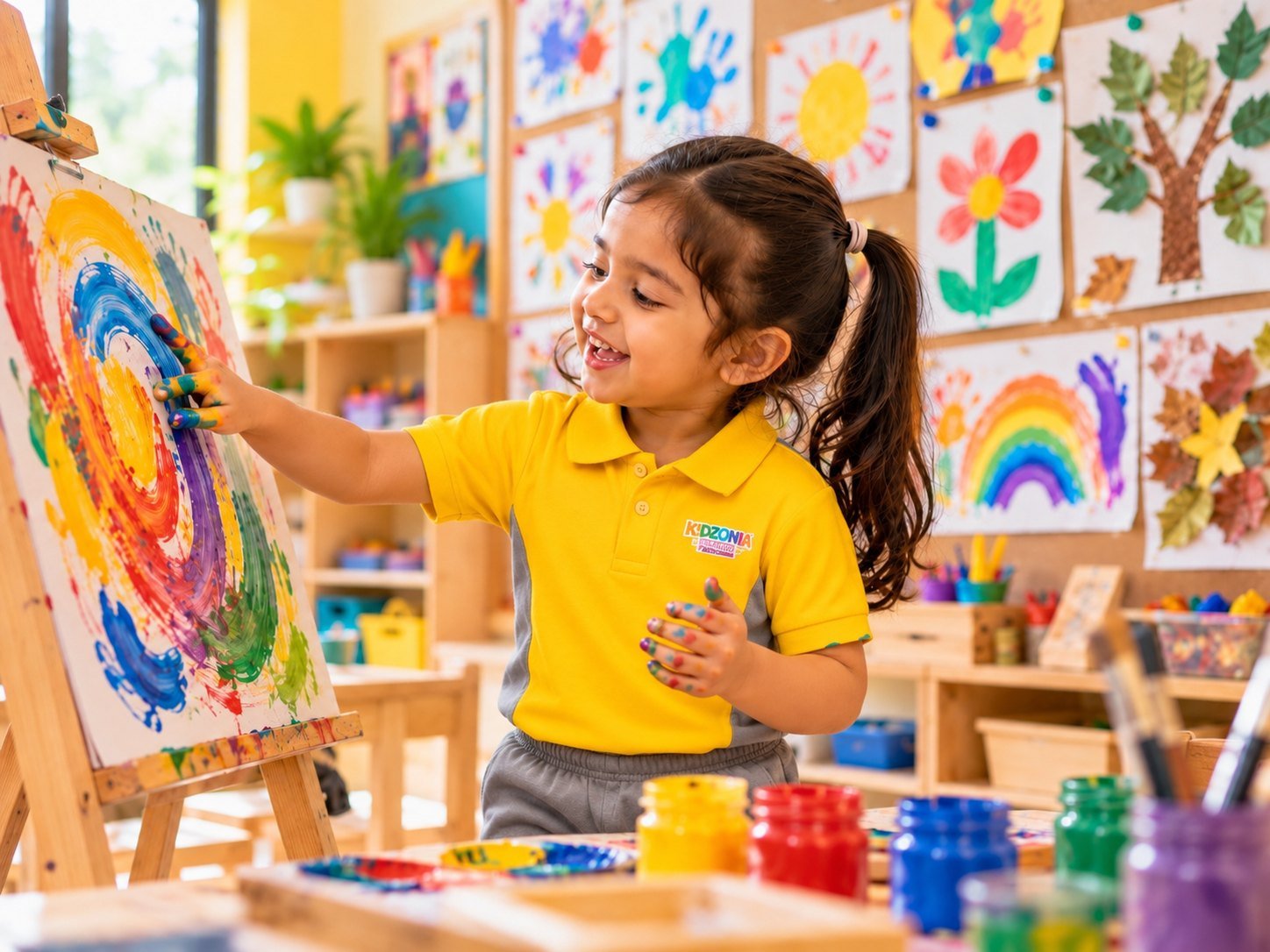
Malaguzzi wrote a poem with the line “the child has a hundred languages”, and then complained that school steals ninety-nine of them. A child expresses an idea through clay, paint, movement, arrangement and argument long before they can write it down. Adults tend to accept only one or two of those languages.
From that come a few practices:
- Projects follow the children. Topics grow out of what children are curious about, not only a pre-set list.
- The environment is a teacher. Rooms are designed to invite exploration and to show children’s work.
- Documentation. Teachers record what children say and make, so that thinking becomes visible to children, teachers and parents.
What it means for a small child
When a child’s drawing or model is taken seriously, asked about and displayed, they learn that their ideas are worth something. That is the beginning of real confidence.
What it looks like at Kidzonia
Children’s work is displayed and taken seriously. Projects follow the children’s questions rather than a pre-set list. If a group becomes fascinated by shadows, we go where that goes.
Try it at home
- Ask your child to tell you about a drawing rather than guessing what it is.
- Put some of their work on the wall, at their eye level.
- When they ask a big question, explore it together instead of answering straight away.
This is one of the six ideas behind DISCOVER, the Kidzonia curriculum. See how all six fit together →
Read about the others: Maria MontessoriHoward GardnerFriedrich FroebelJean PiagetBenjamin Bloom