Kidzonia updates / Uncategorized
Friedrich Froebel: children grow, they don’t get built
The man who invented the kindergarten, and why he thought teaching small children was closer to gardening than to manufacturing.

Friedrich Froebel was a German educator who opened the first kindergarten in 1837. He chose the name carefully: Kindergarten means “children’s garden”, and he meant it literally.
The big idea
Froebel believed that a child unfolds according to their own pattern, the way a plant does. The adult’s job is to provide good soil, light and protection, and then to let growth happen. You can’t pull a seedling to make it grow faster.
A few of his ideas were radical for their time and are now so normal we barely notice them:
- Play is serious work. It is how young children think, not a break from thinking.
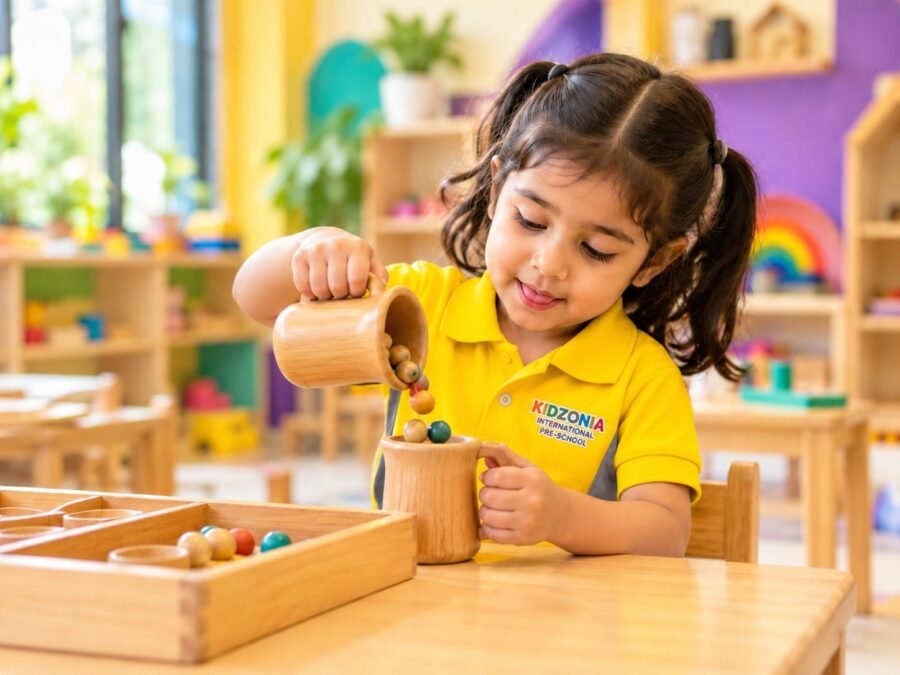
- Hands-on materials. He designed sets of wooden blocks and shapes, which he called “gifts”, for children to build and explore with. Building blocks in every preschool descend from them.
- Outdoors matters. Gardens, nature and fresh air were part of his kindergarten, not extras.
What it means for a small child
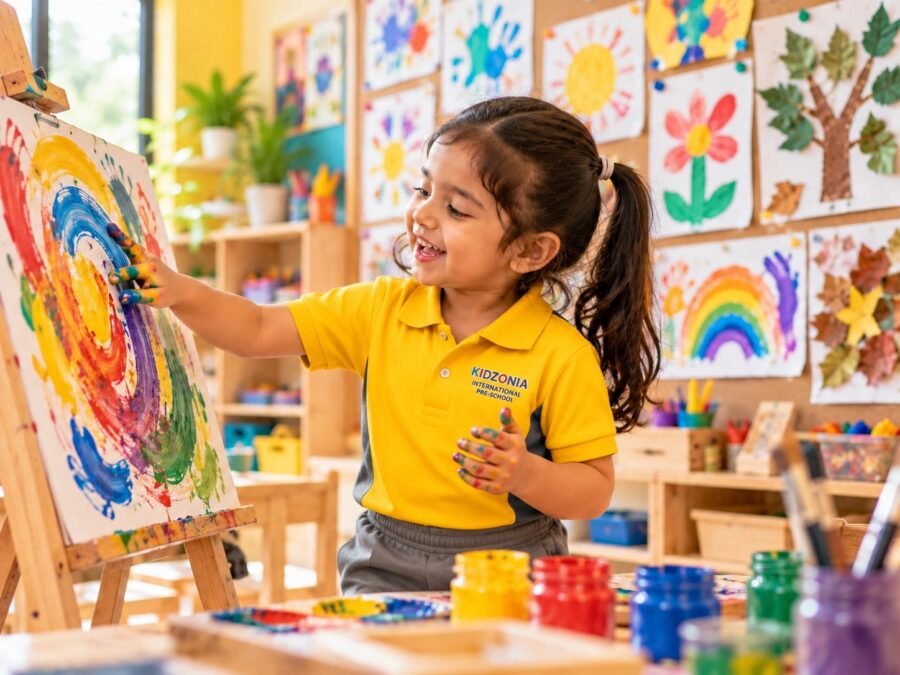
A child who is given time to play freely, outside and with simple materials, is building concentration, imagination and the confidence to try things. None of that shows up on a worksheet, and all of it matters later.
What it looks like at Kidzonia
Outdoor time treated as curriculum rather than as a break from it. Free play protected in the timetable, not squeezed out of it whenever the schedule gets tight.
Try it at home
- Keep a box of simple open-ended things: blocks, boxes, fabric, pegs.
- Make time outside a daily habit, even if it’s only ten minutes.
- Resist filling every free moment with an organised activity.
This is one of the six ideas behind DISCOVER, the Kidzonia curriculum. See how all six fit together →
Read about the others: Maria MontessoriHoward GardnerReggio EmiliaJean PiagetBenjamin Bloom