
● 50+ centres ● 5 cities, 3 states ● 18,000+ children since 2014 ● 50+ awards ● Live CCTV access for parents ● Call +91-8400 15 8500
Kidzonia International Preschool
A three-year-old raising her hand with a question during story time
Our Philosophy

Values first. Everything else is built on top.

Respect for yourself and for other people. An appreciation of difference. A sense that what you do affects somebody else. We think a three-year-old can learn all of that, and that it matters more than writing their name early.

Our philosophy

Why start with values, at three?

A child sorting seashells into five colourful cups

Because it’s the age they’re learning them anyway.

Children are working out how people treat each other long before they can read. They notice who gets a turn, who gets listened to and who gets laughed at. The only real question is whether anyone is teaching that on purpose.

The research says what grandparents have always known: early exposure to difference, and the freedom to explore, lays the groundwork for doing well later. So our rooms are built for children to enjoy themselves while they practise social skills, express themselves, question ideas and build their motor skills. Our enrichment programmes put exposure, investigation and discovery ahead of memorising.

Our values

Three values.
Taught on purpose.

They’re the cornerstones of how we teach, and we’re convinced children of every age can make them their own.

Two children taking turns at the slide while a third waits patiently01
Respect

For themselves and for other people. Waiting for a turn, listening to a friend, saying sorry and meaning it, and expecting the same back.

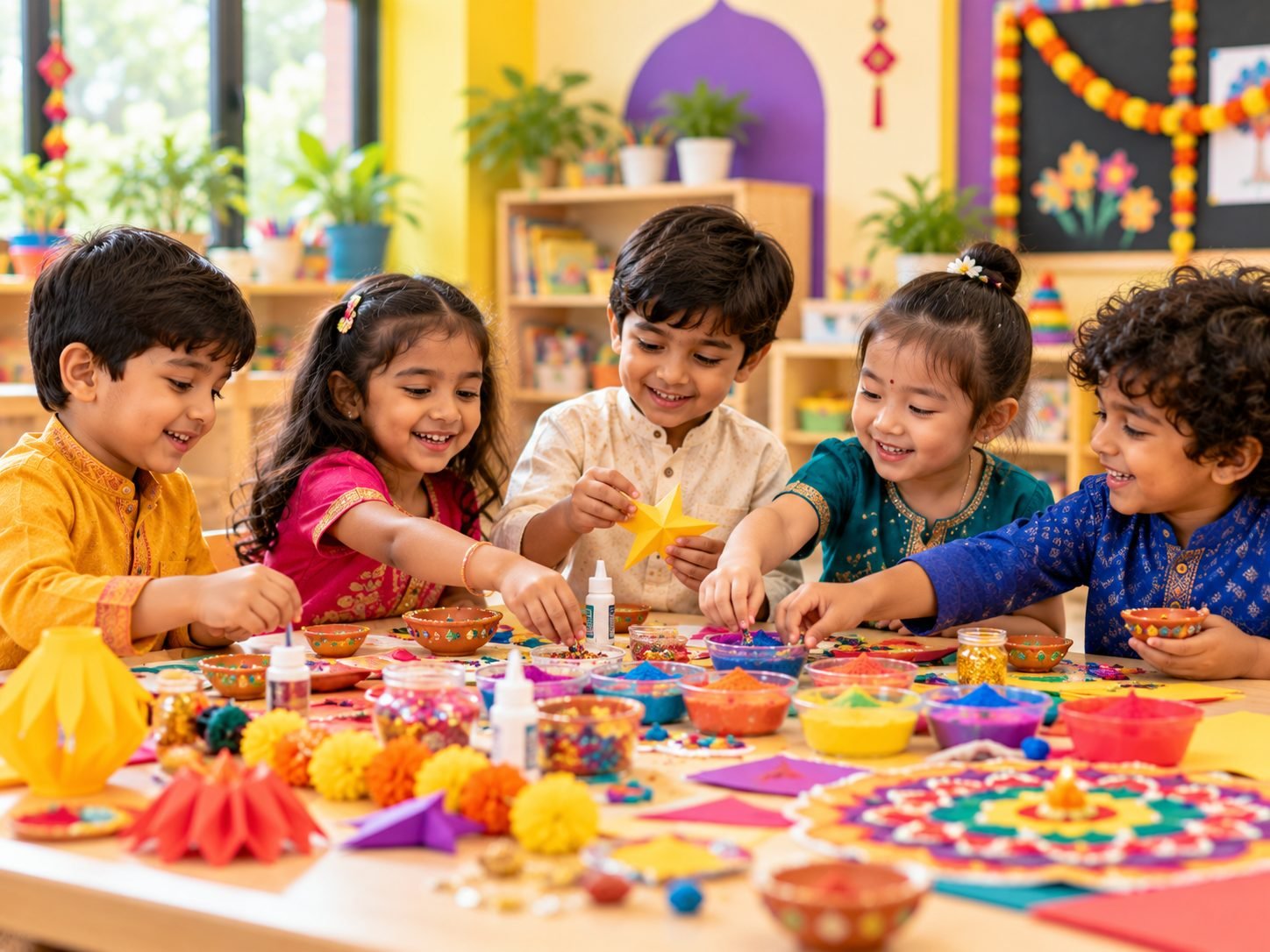
Children in festive clothes from different festivals sharing a craft table02
Diversity

Different languages at home, different festivals, different ways of being clever. Difference is interesting, not strange, and it’s easiest to learn that before anyone tells you otherwise.

A boy hanging his own school bag on a labelled peg03
Responsibility

Personal first: my shoes, my bag, my mess. Then a little wider: our room, our garden, our friends. Eventually, the world they’ll grow up into.

Our approach

The School of Experiences.

Values decide how children treat each other. These decide what we teach them, and how.

01 · Teaching for tomorrow

Teach for their future, not for our past.

The world these children will work in doesn’t exist yet, so our approach keeps changing with it. Children today arrive more switched-on than any generation before them. We meet that with a progressive curriculum where creativity is the foundation and technology is a tool used on purpose, never a babysitter.
02 · Individual potential

Every child has something only they can do.

Every child has particular strengths, and the potential to matter to the people around them. Our job is to find those strengths and build on them. So the curriculum bends to each child’s learning style, pace and way of expressing themselves, during exactly the years when that matters most.

03 · A nurturing environment

It takes a village. We’d like to be part of yours.

Children grow up inside a community: parents, grandparents, teachers, friends, the person at the gate. We build ours deliberately and fit it around what each child needs, so children practise the collaboration and adaptability they’ll need to join a much bigger community later.

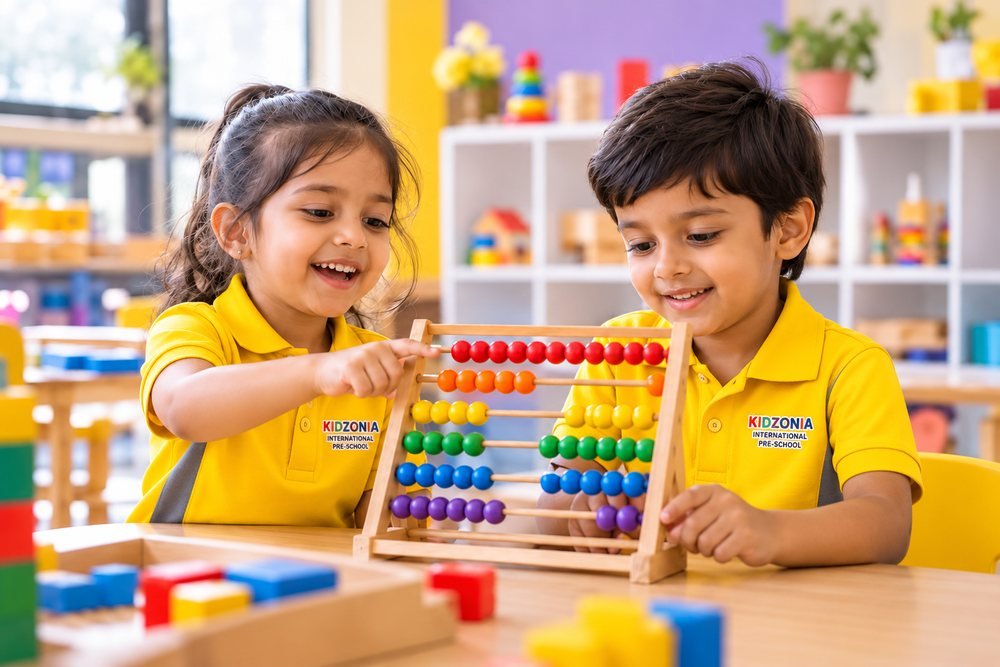
Two four-year-olds counting beads on an abacus
In practice

A philosophy is only worth what happens at 9:40 on a Wednesday.

Values and beliefs are the easy part to write down. DISCOVER, our curriculum, is how we make them practical: six great educational thinkers — Montessori, Gardner, Froebel, Reggio Emilia, Piaget and Bloom — turned into decisions about what each room does, hour by hour.

So when a teacher waits before settling an argument about the slide, or lets a four-year-old take ten minutes over her own snack box, that isn’t a lack of structure. It’s the philosophy, working.

Visit us

Watch it happen rather than reading about it.

Values are hard to put in a brochure and easy to spot in a room. Visit during a session and watch how the children treat each other. That will tell you more than this page can.

Book a visit

Or call us on +91-8400 15 8500

Book an appointment