● 50+ centres ● 5 cities, 3 states ● 18,000+ children since 2014 ● 50+ awards ● Live CCTV access for parents ● Call +91-8400 15 8500
Kidzonia International Preschool
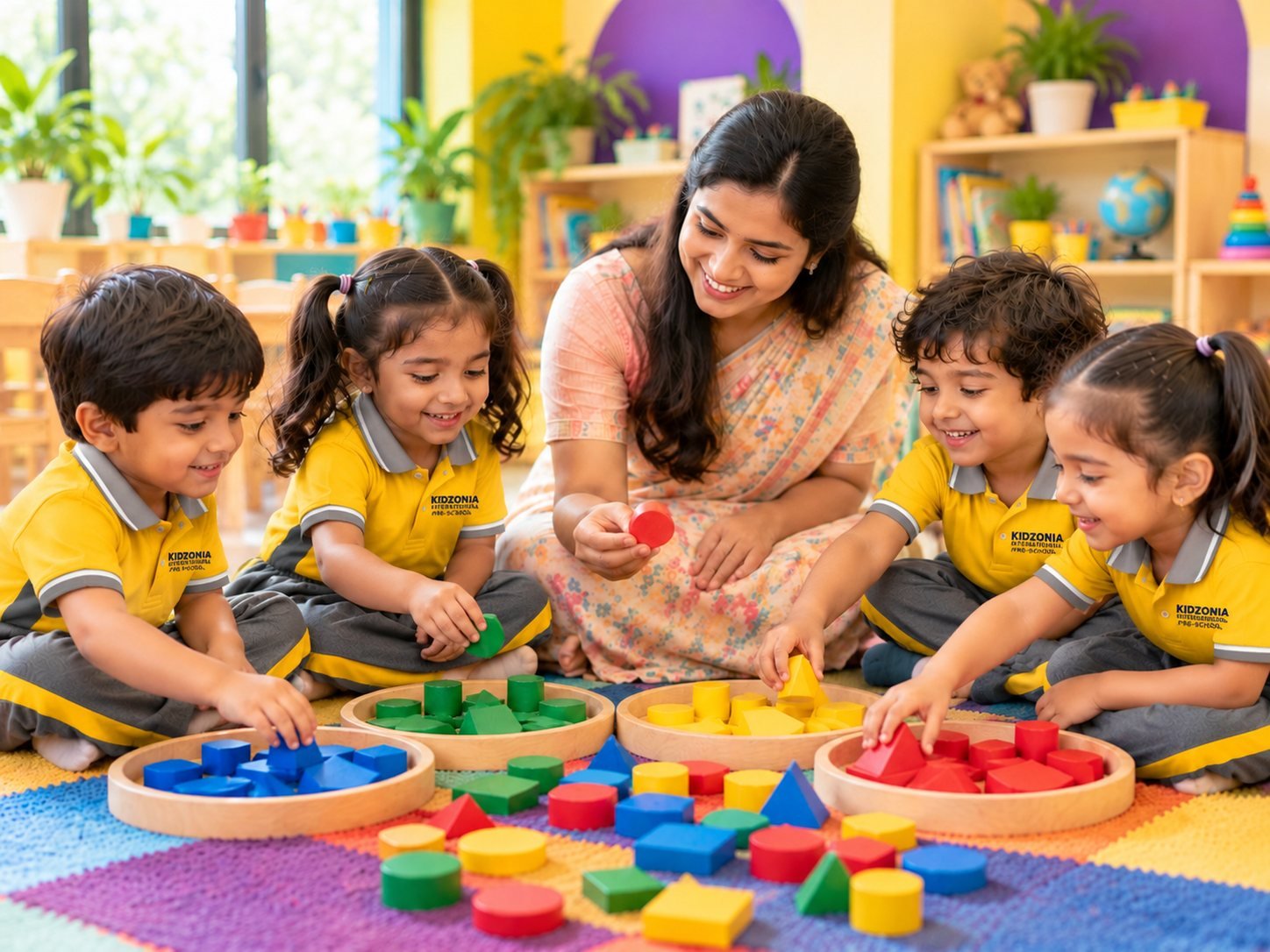
A teacher on the mat showing four children how to sort coloured wooden shapes
The DISCOVER curriculum

Built around the child. Not around the clock.

DISCOVER is how we turn a hundred years of research into young minds into something far more practical: what actually happens in a Kidzonia room at twenty to ten on a Wednesday morning.

Our approach

Somewhere along the way, “school” came to mean sitting still.

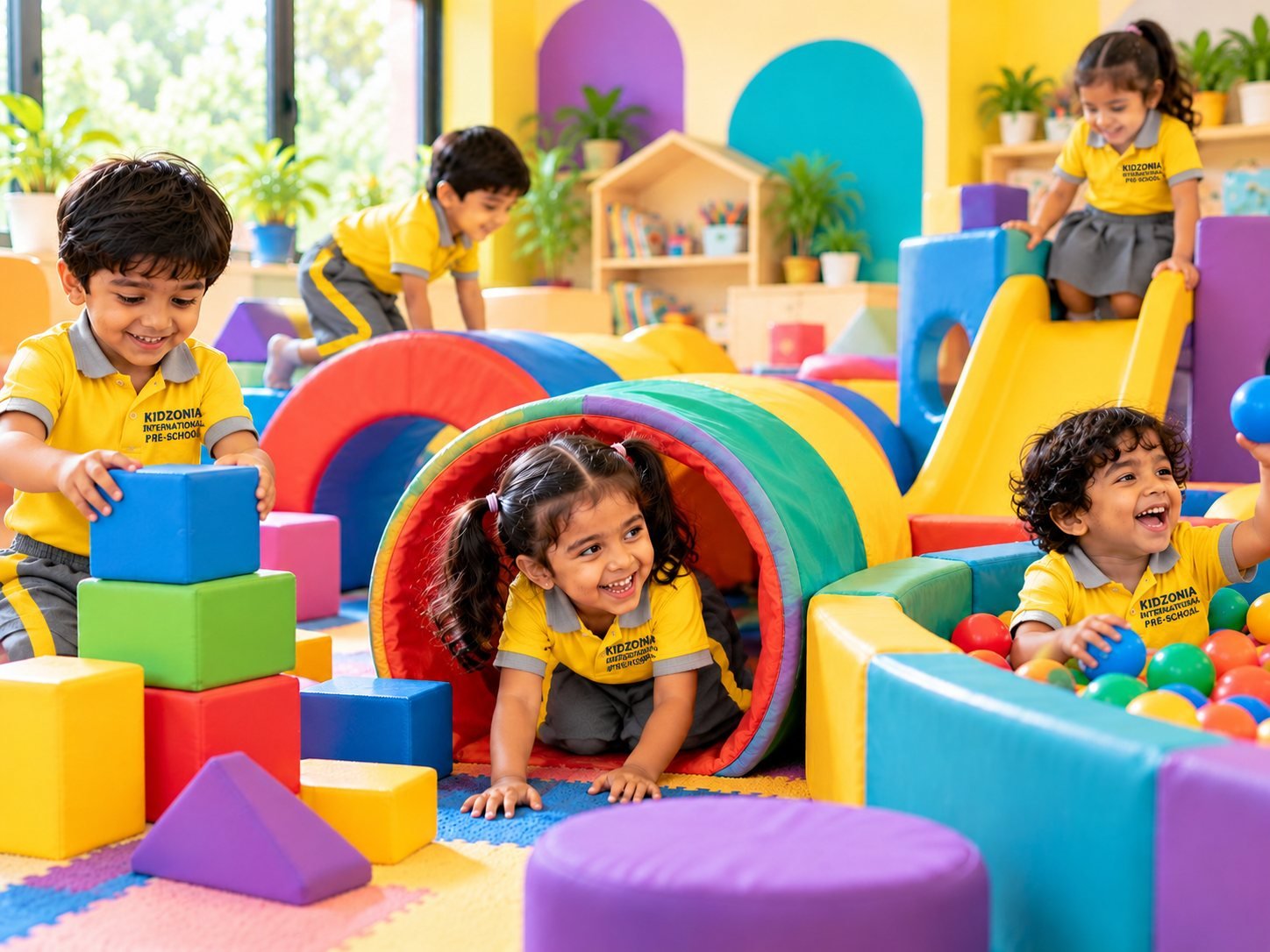
Children climbing and laughing in a colourful soft-play corner

It’s a strange inheritance.

The rows, the front-facing desks, the idea that learning is something delivered to a child rather than built by one. Almost none of that was designed with three-year-olds in mind. It was designed for older students, in a different century, for reasons that had more to do with efficiency than with how people learn.

And yet it trickles downward. Ask most adults to picture a classroom and they’ll picture rows.

The research has been unambiguous for decades: young children construct understanding physically. They need to hold the thing. They need to get it wrong, three or four times, without an adult rushing in to correct them. They need to ask the same question repeatedly, because repetition is not boredom at that age. It’s consolidation.

DISCOVER is built on that evidence rather than on habit. Which is why our rooms look the way they do, and why the first thing most parents say after a visit is that it’s busier than they expected.

It is. That’s deliberate.

Our curriculum

Six different philosophies. One curriculum.

DISCOVER doesn’t follow a single school of thought. It takes the part each one got right.

A girl carefully pouring beads from one small jug into another01
Maria Montessori

Let them set the pace.

What they taught
That children concentrate far more deeply than adults expect, provided the task is real and nobody interrupts. That the goal of a good environment is independence, not compliance.
What it looks like here
Long uninterrupted work periods, so a child who’s absorbed isn’t pulled away at the bell. Real objects at child height: actual jugs, actual brooms, actual buttons to fasten. Materials arranged so a four-year-old can fetch what she needs and put it back without asking permission.
Read the full story: Montessori →
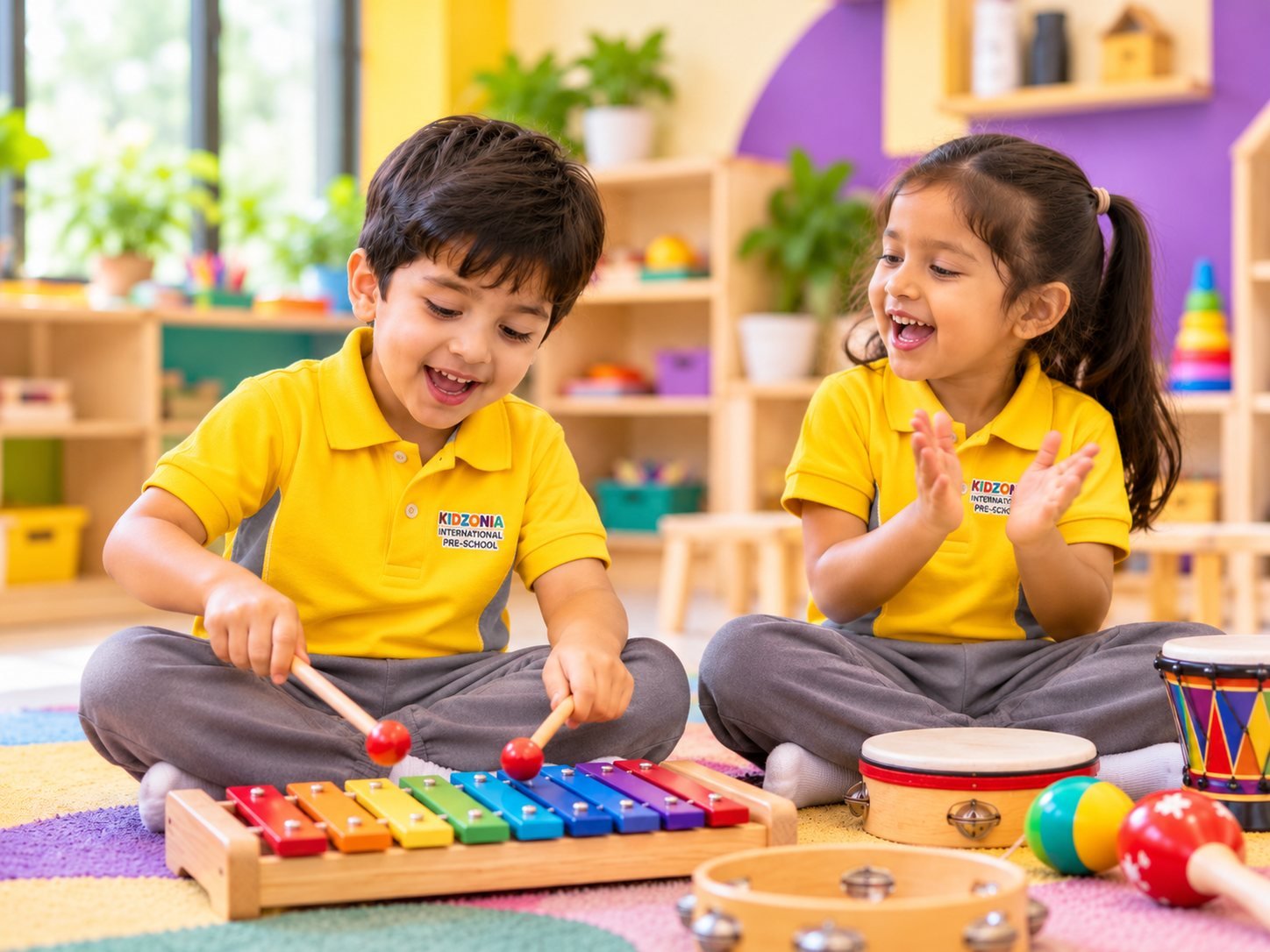
A boy playing a xylophone while a girl claps the rhythm02
Howard Gardner

There’s more than one way to be clever.

What they taught
That intelligence isn’t a single measurable quantity. The child who can’t yet sit through a story may read a room better than anyone in it, or hear a rhythm nobody else noticed.
What it looks like here
Every theme is planned across multiple intelligences, so a month on plants is available through movement, music, building, drawing and talking. No child spends the year being taught in the one language they happen to be weakest in.
Read the full story: Gardner →
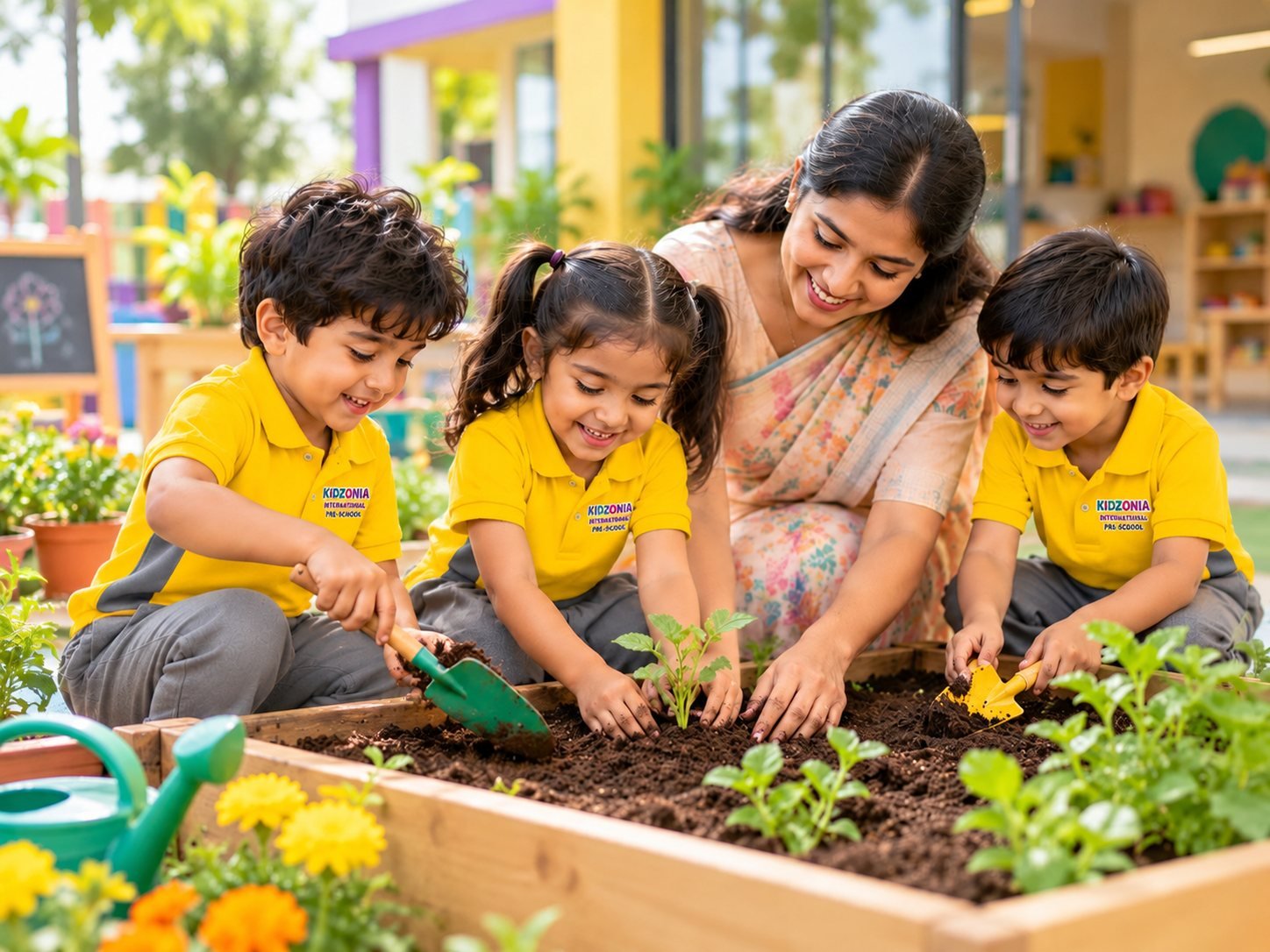
Children planting seedlings in the centre garden with their teacher03
Friedrich Froebel

Children grow, they don’t get built.

What they taught
He invented the kindergarten, literally a garden of children, on the belief that a child unfolds according to their own pattern, and the adult’s job is closer to gardening than to manufacturing.
What it looks like here
Outdoor time treated as curriculum rather than as a break from it. Free play protected in the timetable, not squeezed out of it whenever the schedule gets tight.
Read the full story: Froebel →
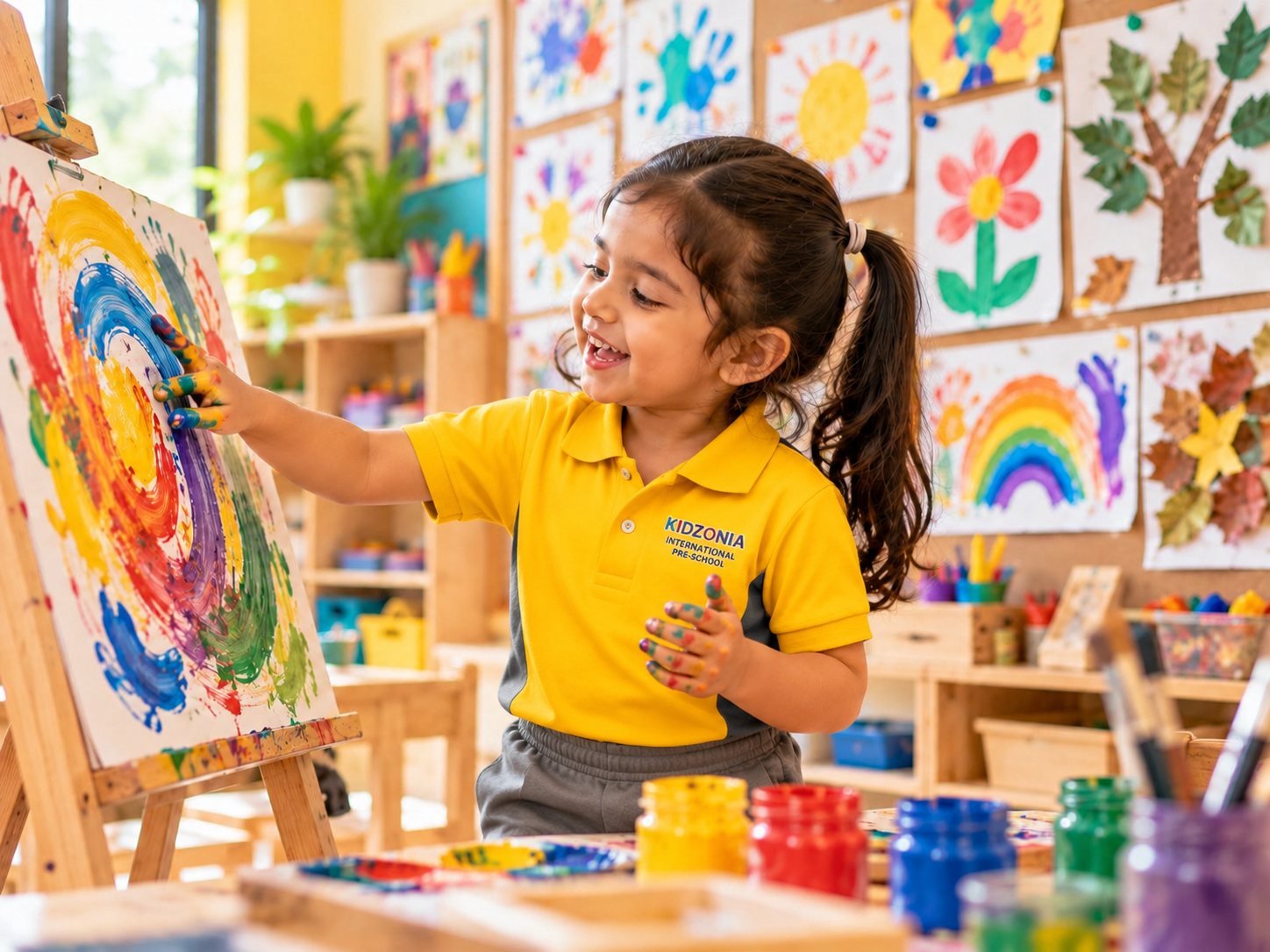
A girl painting at an easel with children’s artwork pinned behind her04
The schools of Reggio Emilia

A hundred languages.

What they taught
That a child has a hundred ways of expressing an idea long before they can write it down, through clay, paint, movement, arrangement and argument, and that adults tend to accept only one or two of them.
What it looks like here
Children’s work is displayed and taken seriously. Projects follow the children’s questions rather than a pre-set list. If a group becomes fascinated by shadows, we go where that goes.
Read the full story: Reggio Emilia →
Two children pouring water between a tall glass and a wide bowl05
Jean Piaget

Ready when they’re ready.

What they taught
That young minds move through genuine stages, and that a concept introduced before the child is ready doesn’t accelerate them. It teaches them that this subject is something they’re bad at.
What it looks like here
It’s the reason we don’t put a pencil in a two-year-old’s hand and ask for letters. Sequencing is deliberate. What arrives in Kidzo Junior arrives then for a reason, and pushing it earlier would cost more than it gained.
Read the full story: Piaget →
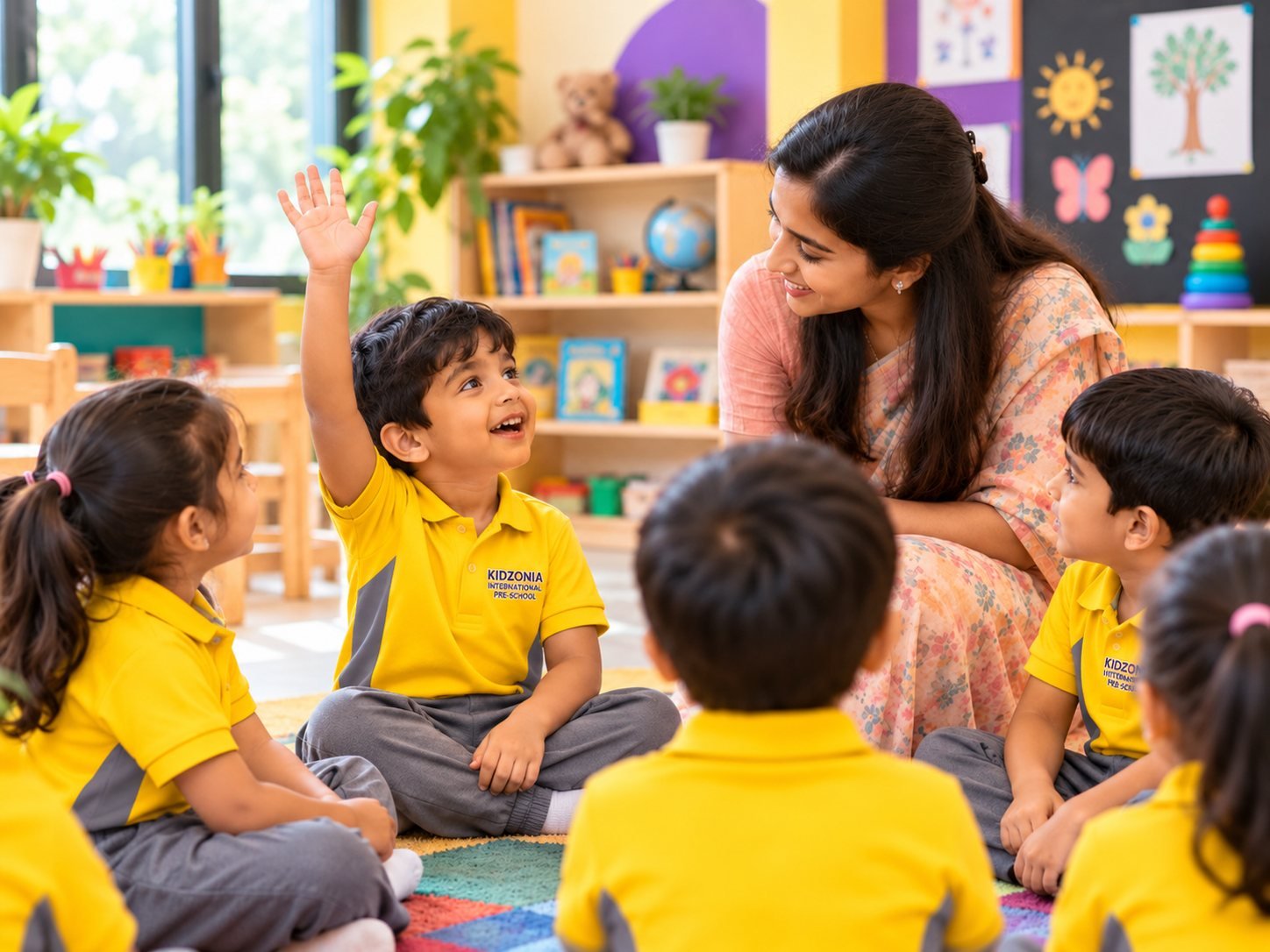
A boy raising his hand to ask a question during circle time06
Benjamin Bloom

Thinking gets built in layers.

What they taught
That understanding has an order: remember, understand, apply, analyse, evaluate, create. Skipping the lower layers produces children who can recite without comprehending.
What it looks like here
Teachers are trained to ask the next question. Not just “what colour is it?” but “why do you think that one sank?” The second question is where the learning actually is.
Read the full story: Bloom →
Multiple intelligences

Eight ways of being clever. Your child is at least three of them.

And almost certainly not the same three as the child sitting beside them.

  • Word smartLoves stories, wordplay, being read to, telling you things at length
  • Number smartSorts, counts, spots patterns, asks how many
  • Picture smartThinks in images, builds, draws, navigates, notices detail
  • Body smartLearns through movement. Has to do it to understand it
  • Music smartCatches rhythm and tune fast, remembers things set to music
  • People smartReads the room, organises the game, notices who’s left out
  • Self smartKnows their own mind, plays contentedly alone, reflects
  • Nature smartDrawn to animals, plants, weather, collecting, classifying

None of these is better than another, and no child is only one. The point of naming them is practical: if a teacher knows a child learns best through movement, she stops treating his inability to sit still as a behaviour problem and starts treating it as information.

It also changes what we tell you. At a parent-teacher meeting we’re not just reporting whether your son can count to twenty. We’re telling you how he gets to twenty, because that’s the more useful thing to know.

Teaching methods

How it actually runs.

Four methods, used together, chosen for what each one does best.

  1. 01Playway learning

    Children are already investigating the world constantly. Playway simply attaches the learning objective to something they were going to do anyway. A shop corner is arithmetic and negotiation. A water tray is volume, cause and effect, and forty minutes of concentration you couldn’t have bought any other way.

  2. 02Montessori practice

    Self-directed work with materials designed to be self-correcting, so the child discovers their own mistake without an adult announcing it. This is where independence is built, and it’s why our four-year-olds tidy up better than most adults expect.

  3. 03Thematic instruction

    We teach in themes rather than subjects, because children don’t experience the world in subjects. A month on the market becomes counting, money, food, community, role play, vocabulary and a visit. Everything connects to everything, which is exactly how memory works.

  4. 04Experiential learning

    Learning through reflection on doing. The doing is only half of it. The other half is the conversation afterwards, when a teacher asks what happened, what surprised them, and what they’d try differently. That second half is the part most schools skip.

Themes in practice

A month on plants.

Here’s what a single theme actually contains, so you can see how much is going on underneath.

Children planting seedlings in the centre garden with their teacher
  • Sciencewhat a seed needs, and what happens when we forget to water it
  • Mathsmeasuring how much it has grown, counting leaves, comparing two pots
  • Languagenew words: seed, root, stem, sprout, wilt, bloom
  • Artprinting with leaves, and drawing the same plant once a week to see it change
  • Musicsongs about growing, and moving fast and slow like a plant in the wind
  • Movementcurling up as a seed, then stretching into a tree
  • Worldwhere the food on our plate comes from
  • Feelingwhat it’s like to look after something that depends on you

Eight areas of development. One pot of soil. Your child will tell you they got muddy.

Technology

Yes, there are screens. No, they aren’t a babysitter.

We’d rather be straight with you about this, because screen time is one of the things parents worry about most and one of the things preschools are vaguest about.

Smart TVs and tablets are used in our rooms for short, planned, specific purposes: a maths game that adapts to a child’s level, a phonics app that lets a child hear a sound as many times as she needs to without anybody sighing, an image of a place we’re learning about that we couldn’t otherwise visit.

They are always shared or supervised, never a substitute for an adult, and never used to occupy a room. The overwhelming majority of a Kidzonia day involves no screen at all.

Assessment

We don’t test four-year-olds. We watch them, closely, and we write it down.

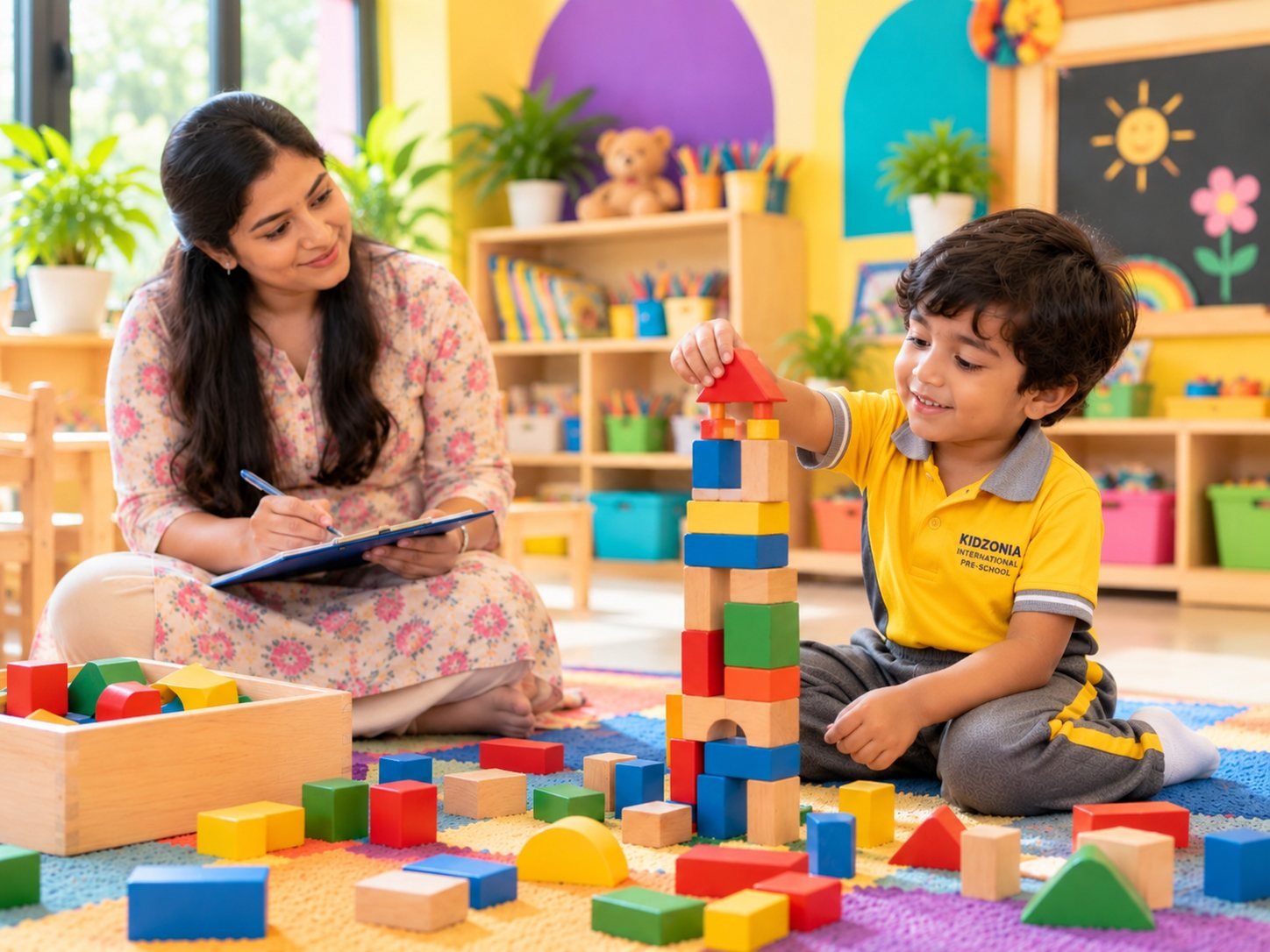
A teacher making notes while watching a boy build a block tower

Formal testing at this age measures very little except how a child copes with formal testing. So instead we assess the way early-years research recommends: through structured observation, over time, against known developmental milestones.

  • Teachers record specific observations against milestones across language, motor skills, cognition, social development and emotional regulation.
  • We keep a record of the work your child makes, so progress is something you can see rather than something we describe.
  • Parent-teacher meetings walk you through all of it: what’s arrived, what’s arriving, and what’s still some way off.
  • Nothing is a surprise. If something concerns us, you’ll hear it early and in person, not in a report at the end of term.

We’ll also tell you the unglamorous things, because they’re often the ones that matter: that he’s started resolving arguments himself, that she’s begun choosing harder tasks when an easier one was available.

Visit us

It reads well. It’s better to see.

Book a visit and we’ll show you the rooms, the materials and the way a Kidzonia space is set up — and answer whatever you’d like to ask.

Or call us on +91-8400 15 8500

Book an appointment